Greetings, fellow Scarborough residents.
Scarborough’s streetscapes are evolving quickly. In recent years, we’ve seen plazas on our main streets bulldozed for high rise housing with more rezoning applications in progress. Our employment lands are at risk too, as developers are incentivized to rezone them for high rise residential, which will always be the highest value land use in the absence of planning policies which curb this from happening.
For the last several years, the Scarborough Community Renewal Organization has been pushing back on this, reminding our political and public policy leaders that Scarborough needs to be designed as a complete community, as our streetscapes continue to evolve. That includes more housing, in some cases. But more residents mean we’ll also need more employment opportunities, more neighbourhood retail, and more community amenities. Getting this message across has sometimes been an uphill battle.
Now this battle is opening on a new front: protecting our schools.
In 2025, City Council relaxed its planning policies to allow “mid-rise” housing, generally up to 14 storeys, on most of Toronto’s “avenues”, being most of our main streets. However, many Toronto residents associations advocated to City Council that school properties should be excluded from this new policy. Council agreed.
However, Toronto’s two largest school boards, the TDSB and the TCDSB, have appealed this exclusion to the Ontario Land Tribunal.
Both school boards are under provincial supervision and are therefore under the direct control of the Minister of Education. The Minister supports the appeal and was quoted on CityNews saying it is the responsibility of the school boards to ensure that “the asset value of our educational institutions is maintained at their highest possible level”.
It’s one thing for school boards to close schools where local school-age populations change over time. It’s quite another for school boards to be recast as developers, prioritizing the maximization of asset values as part of their core mission and business model.
This isn’t just a Scarborough issue, as it affects the rest of Toronto too. But Scarborough has seen this play out before. We’ve lost three high schools and five elementary schools over the past 25 years. Most have been converted to housing.
The two appeals to the Ontario Land Tribunal affect forty-four Scarborough schools! They would all be at greater risk of being redeveloped if the appeal is successful, given the strong financial incentives for the boards to do so.
But schools are more than just learning centres. They often have child care centres, which work hand-in-hand with the school. They provide much-needed neighbourhood green space. And they are hubs for all kinds of community programming. In short, they are a centre of civic life for our community members, especially those with school-aged children.
None of these services maximize asset values. But schools provide enormous “social capital” to our neighbourhoods and are important components of complete communities.
If planning principles are to be designed around maximizing asset values, whether it’s schools, neighbourhood retail, or employment lands, we’ll end up with lots of high rise housing and not much else. What an uninspiring outcome that would be.
But if planning principles truly strive to promote complete communities, we need to prioritize the “social asset value” that community assets like schools, parks, and community centres contribute to Scarborough, the place we have all chosen to call home.
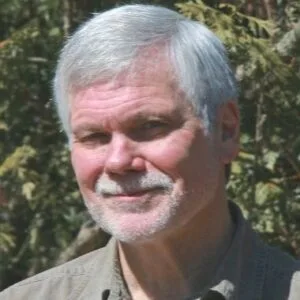
Larry Whatmore
President
Scarborough Community Renewal Organization | https://www.scro.ca
Scarborough Walk of Fame | https://scarboroughwalkoffame.com/
Larry.Whatmore@rogers.com
(416) 562-2101